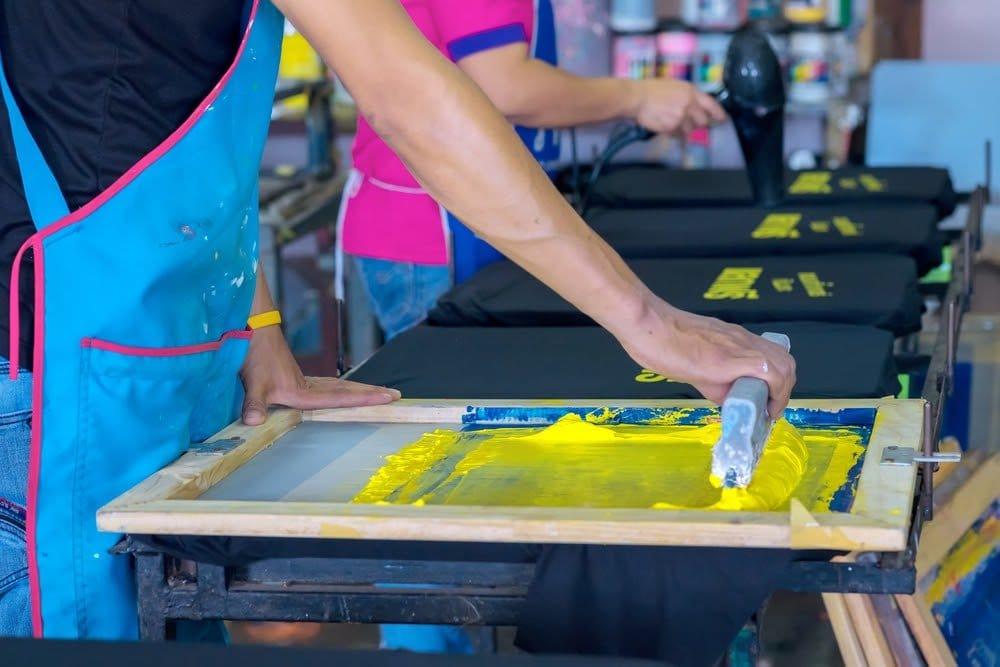
Screen printing (also called silkscreen printing) is a printing technique in which ink is pushed through a fine mesh screen onto a surface, except in areas blocked by a stencil. It is commonly used to print designs on:
T-shirts and clothing
Posters and artwork
Signs and banners
Packaging
Electronics (such as circuit boards)
How it works
A design is created and transferred onto a mesh screen.
Parts of the screen are blocked to form a stencil.
The screen is placed over the material to be printed.
Ink is poured onto the screen.
A rubber tool called a squeegee pushes the ink through the open areas of the mesh.
The printed item is dried or cured.
Advantages
Produces vibrant, durable colors
Works on many materials (fabric, paper, plastic, metal, glass, wood)
Cost-effective for large quantities
Excellent for bold, simple designs
Disadvantages
Setup can be time-consuming
Less economical for small print runs
Each color usually requires a separate screen
Example
If you want a T-shirt with a three-color logo, a screen printer typically prepares three separate screens—one for each color—and prints them one layer at a time to create the final image.
Screen printing is one of the most popular methods for custom apparel because it produces long-lasting prints that resist fading and cracking.


Post a Comment
You must be logged in to post a comment.